
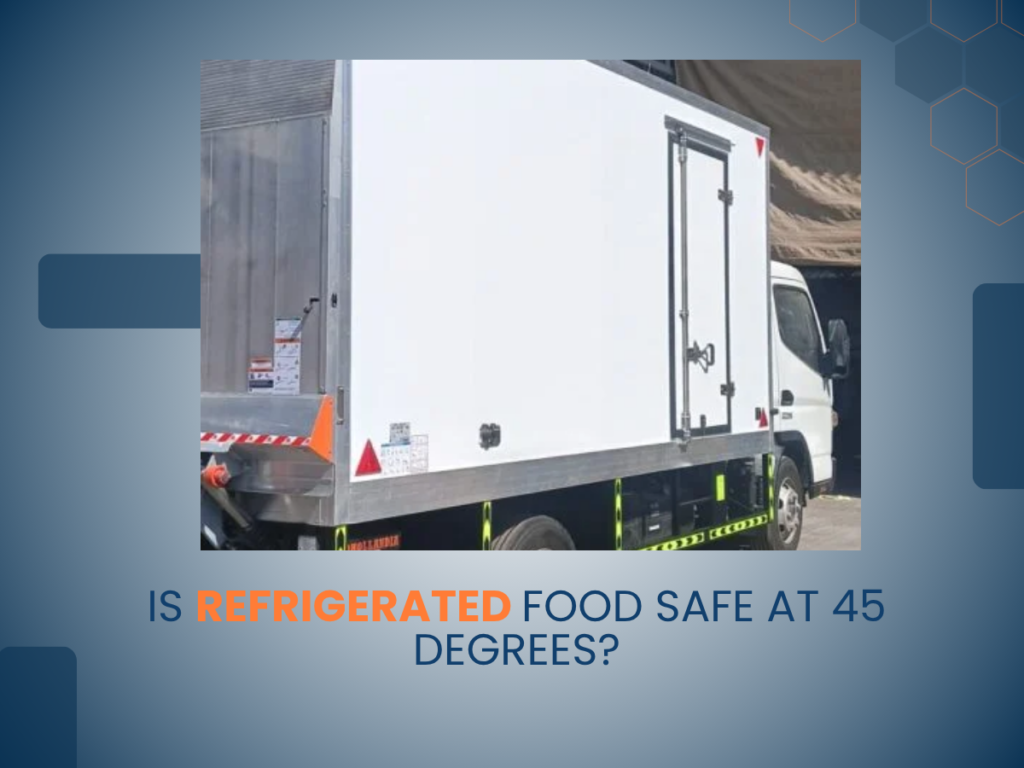
No, refrigerated food safe at 45 degrees is generally unsafe if the internal food temperature rises above 5°C. Bacteria multiply rapidly between 5°C and 60°C, known as the danger zone. Proper refrigeration systems like reefer containers maintain temperatures below 5°C, ensuring food safety even in extreme climates.
Understanding the Food Safety Temperature Range
Food safety depends on maintaining proper storage temperatures.
The safe refrigeration range is:
- 0°C to 5°C for perishable food
- Below -18°C for frozen items
When external temperatures reach 45°C, standard cooling systems may struggle to maintain safe internal conditions.
This is why businesses rely on temperature controlled containers in Dubai for food safety to prevent spoilage.
Why Refrigerated Food Safe at 45 Degrees Is a Concern
At 45°C ambient temperature, the risk of food spoilage increases significantly.
Here is why:
- Heat transfer can raise internal food temperature
- Refrigeration systems may become overloaded
- Frequent door openings increase exposure
If food temperature rises above 5°C, bacteria can grow rapidly. This makes refrigerated food safe at 45 degrees a serious concern without proper systems.
The Danger Zone Explained
The “danger zone” for food safety is between 5°C and 60°C.
Within this range:
- Bacteria multiply quickly
- Food quality deteriorates
- Risk of foodborne illness increases
This is why maintaining consistent cooling is essential in extreme climates like Dubai.
How Reefer Containers Keep Food Safe in Extreme Heat
Modern reefer containers are designed to overcome extreme environmental conditions.
They ensure that refrigerated food safe at 45 degrees becomes achievable with proper technology.
Advanced Insulation Systems
Reefer containers use high-density insulation to block external heat.
This helps maintain stable internal temperatures even when outside temperatures are extremely high.
Powerful Cooling Units
Reefer containers are equipped with advanced refrigeration systems that:
- Maintain consistent cooling
- Adjust automatically based on external heat
- Prevent temperature spikes
Businesses searching for the best refrigerated container in Dubai prioritize these features.
Airflow Management
Proper air circulation ensures even cooling across all stored items.
This prevents hotspots and ensures uniform temperature distribution.
Real-Time Monitoring
Modern systems include sensors that track:
- Temperature changes
- Humidity levels
- Equipment performance
These features help maintain compliance and ensure food safety.
Industries That Cannot Risk Temperature Fluctuations
Several industries depend on strict temperature control.
Food and Beverage Sector
Restaurants, catering companies, and supermarkets rely on proper refrigeration to maintain quality.
Logistics and Distribution
Transporting food across long distances requires reliable cold chain solutions.
Companies often partner with reefer container suppliers in UAE for efficient operations.
Hospitality Industry
Hotels and event companies require consistent refrigeration to ensure guest safety.
Choosing the Right Cold Chain Partner
Selecting the right provider is essential for food safety.
Look for:
- Proven expertise
- Advanced technology
- Customization options
- Reliable support
A trusted vehicle body manufacturer in Dubai can deliver tailored solutions for food transport needs.
Custom Refrigeration Solutions for Better Safety
Not all food products have the same storage requirements.
Providers offering Best custom vehicle modification in Dubai deliver:
- Multi-temperature compartments
- Custom storage layouts
- Flexible cooling systems
These solutions help businesses optimize operations while ensuring safety.
Common Mistakes That Lead to Food Spoilage
Avoiding these mistakes can improve food safety:
- Overloading refrigeration units
- Frequent door openings
- Poor maintenance of cooling systems
- Using non-specialized containers
Proper planning and equipment selection are key to avoiding losses.
Benefits of Using Advanced Refrigeration Systems
Improved Food Safety
Maintains consistent temperature and reduces contamination risk.
Reduced Waste
Prevents spoilage and extends shelf life.
Better Compliance
Meets food safety regulations and standards.
Higher Customer Satisfaction
Ensures quality and freshness of products.
Future Trends in Food Refrigeration
The industry is evolving with new innovations.
Smart Monitoring Systems
IoT-based solutions provide real-time data and alerts.
Energy Efficiency
Modern systems consume less power while delivering better performance.
Sustainable Cooling
Eco-friendly refrigerants are becoming more popular.
Frequently Asked Questions (FAQs)
1. Is refrigerated food safe at 45 degrees outside temperature?
Yes, but only if the refrigeration system maintains internal temperatures below 5°C consistently.
2. What happens if food temperature rises above 5°C?
Bacteria can grow rapidly, increasing the risk of spoilage and foodborne illness.
3. How do reefer containers help in extreme heat?
They use insulation, cooling systems, and airflow management to maintain stable internal temperatures.
4. Can refrigerated transport be customized?
Yes, providers offering Best custom vehicle modification in Dubai can design solutions based on specific needs.
5. Why choose professional reefer container suppliers?
Experienced reefer container suppliers in UAE provide reliable systems that ensure food safety and reduce losses.
Conclusion
The answer depends on the quality of refrigeration systems. Without proper cooling, food becomes unsafe quickly. However, advanced reefer containers and cold chain solutions can maintain safe temperatures even in extreme heat.
Businesses must invest in reliable systems to protect their products, reputation, and customers.
Contact VD Refrigeration today to explore the best refrigerated container in Dubai and discover how we can help you maintain food safety and reduce losses.