
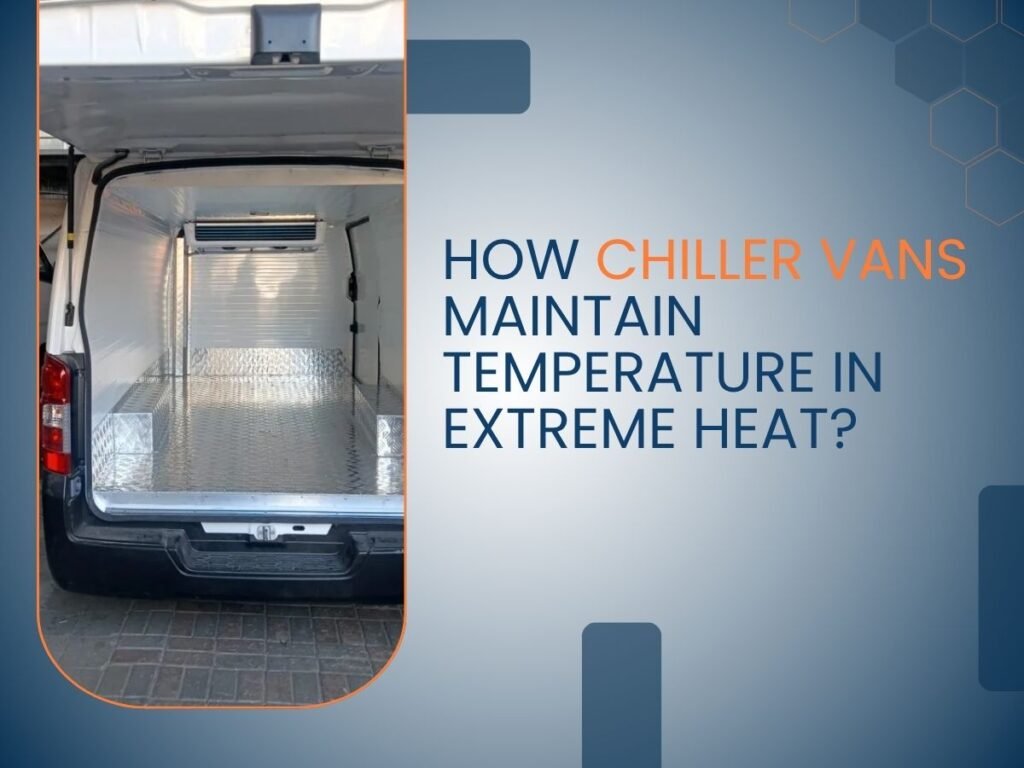
When outdoor temperatures regularly reach 45°C or higher, keeping perishable goods cold during transport is not just a business challenge – it is a matter of product safety and regulatory compliance. Whether you are moving fresh food, dairy, medicines, or chilled beverages, a well-built chiller van is the backbone of your cold chain.
This guide explains the science behind how chiller vans maintain temperature in extreme heat, the key components that make them reliable in the UAE’s harsh climate, and what to look for when choosing a refrigerated van in Dubai.
Why Temperature Control Matters in Dubai’s Climate
The UAE is one of the hottest countries in the world. Summer temperatures routinely exceed 45°C, and road surfaces can radiate heat far beyond that. For the food, pharmaceutical, and logistics industries, this creates immense pressure on refrigerated transport.
A single temperature excursion – even a brief one – can compromise the quality and safety of perishable goods. This is why chiller van insulation and refrigeration technology are critical, not optional.
How Chiller Van Refrigeration Systems Work
A chiller van is not simply a vehicle with a cold box attached. It is an engineered system designed to remove heat from the cargo area continuously and maintain a precise temperature range, even when ambient temperatures are extreme.
The core system works as follows:
- The refrigeration unit (also called the reefer unit) runs a refrigerant through a cycle of compression, condensation, expansion, and evaporation to extract heat from inside the cargo space.
- The evaporator coil inside the van absorbs heat from the air inside the cargo area, cooling it down.
- The condenser releases that heat to the outside environment.
- A thermostat or digital controller monitors the internal temperature and cycles the unit on and off to maintain the set point.
This cycle runs continuously, fighting the constant heat load from the hot exterior – which is why insulation plays such a critical supporting role.
The Role of Insulated Panel Systems in Chiller Vans
Even the most powerful refrigeration unit cannot compensate for poor insulation. Insulated panel systems for chiller vans are designed to minimise heat transfer from the outside world into the cargo area.
High-quality chiller van panels typically use:
- Polyurethane (PUR) foam core – one of the most efficient insulating materials available, with low thermal conductivity
- Fibreglass or aluminium inner and outer skins durable, food-safe, and resistant to moisture
- Sealed joints and airtight door seals – to prevent warm air infiltration every time the van door is opened
The thickness of the insulation panel directly impacts how hard the refrigeration unit must work. Thicker panels with high-density foam reduce the thermal load significantly, which lowers fuel consumption and extends the life of the refrigeration unit.
In the UAE context, where ambient heat is punishing, investing in premium insulated panels is not a luxury – it is a cost-saving decision over the life of the vehicle.
Single vs. Multi-Temperature Chiller Compartments
Modern chiller vans in Dubai can be configured as single-temperature or dual-temperature (multi-temp) units. This choice depends on the goods being transported.
Single-temperature vans maintain one consistent temperature throughout the cargo space. They are ideal for:
- Fresh produce (0°C to 4°C)
- Chilled dairy products
- Beverages
Dual-temperature chiller vans divide the cargo area into two compartments, each with its own temperature zone. One section might run at chiller temperature (0°C to 4°C) while the other runs at freezer temperature (-18°C or below). This configuration suits:
- Caterers and restaurant suppliers delivering both fresh and frozen goods
- Pharmaceutical companies carrying different product types
- Supermarket distributors
Having the flexibility to carry multiple product categories in one vehicle improves route efficiency and reduces overall fleet costs.
Energy-Efficient Refrigeration Solutions for Hot Climates
Running a refrigeration unit in extreme heat demands more energy than in temperate climates. The compressor must work harder and longer to maintain the target temperature. This directly impacts fuel costs and the carbon footprint of your fleet.
Energy-efficient refrigeration solutions include:
- Variable-speed compressors that adjust output to match the actual cooling load
- Solar-assisted pre-cooling panels to reduce initial heat load before departure
- Eutectic (phase-change) plates used alongside or instead of mechanical units to store cold energy during off-peak hours and release it during delivery rounds
- Aerodynamic body design to reduce drag and improve fuel efficiency
Operators in the food delivery and pharmaceutical cold chain industries in the UAE are increasingly adopting these technologies to comply with sustainability targets and reduce operating costs.
Temperature Monitoring Equipment in Refrigerated Vans
A chiller van that maintains temperature is only useful if you can prove it. Temperature monitoring equipment is now a standard requirement for most regulated industries.
Modern chiller van monitoring systems include:
- Data loggers that record temperature at set intervals throughout the journey
- Real-time telematics that transmit temperature data to a cloud dashboard accessible by fleet managers
- SMS or app-based alerts that notify drivers and supervisors if the temperature goes outside acceptable limits
- Printable reports for compliance documentation (required in pharmaceutical logistics and food safety audits)
In the UAE, food safety regulations and pharmaceutical cold chain guidelines both require documented temperature records. Having reliable monitoring equipment built into your chiller van is no longer optional for businesses operating in these sectors.
Chiller Van Maintenance Packages: Protecting Your Investment
Even the best chiller van will underperform if it is not maintained properly. In Dubai’s extreme heat, maintenance becomes even more critical.
A proactive chiller van maintenance programme should include:
- Regular cleaning of condenser coils (dust accumulation is a significant problem in the UAE)
- Checking and replacing door seals and gaskets to prevent air leakage
- Inspecting refrigerant levels and checking for leaks
- Servicing the compressor and drive belt
- Checking insulation panels for delamination or moisture ingress
- Calibrating temperature sensors and data loggers
A maintenance contract with a specialist provider ensures your refrigerated van is always ready for service and that temperature-sensitive cargo is protected. Downtime in cold chain logistics has a direct and immediate cost.
What to Look for in Chiller Van Manufacturing in Dubai
If you are commissioning a new chiller van or refurbishing an existing vehicle, the quality of manufacture matters enormously. Key factors to evaluate include:
- Panel thickness and foam density – ask for thermal conductivity (U-value) data
- Refrigeration unit brand and capacity – sized correctly for the cargo volume and expected ambient conditions
- Build quality of joints, floor, and door seals – these are the most common points of heat ingress
- Compliance with food safety and pharmaceutical standards – including hygiene-friendly interior surfaces
- After-sales support and maintenance availability – from the same manufacturer
VD Technical (VD Refrigeration) manufactures chiller vans in Dubai built specifically for UAE conditions. Their vehicles use high-density polyurethane insulated panels, professional refrigeration unit installation, and are customisable for single or dual-temperature configurations. They also offer chiller van maintenance packages and body repair services to support operators throughout the vehicle’s lifecycle.
Frequently Asked Questions
Q1: What temperature should a chiller van maintain for food products?
A: The correct temperature depends on the product type. Fresh meat and fish typically require 0°C to 2°C. Dairy and fresh produce are generally stored at 2°C to 4°C. Frozen goods require -18°C or below. Most chiller vans in the UAE are built to maintain a range of -20°C to +20°C, configurable to the operator’s needs.
Q2: How often should the refrigeration unit on a chiller van be serviced?
A: In the UAE, where the refrigeration unit works harder due to extreme ambient temperatures, servicing every three to four months is recommended. At minimum, an annual comprehensive service should be completed, with monthly visual inspections of coils, seals, and fluid levels.
Q: Can a chiller van body be added to an existing commercial vehicle?
A: Yes. A specialist manufacturer can fit a custom-built insulated refrigerated body to a wide range of commercial vehicles, from small panel vans to large trucks. The refrigeration unit is selected based on the cargo volume, required temperature range, and the vehicle’s electrical and engine specifications. This is a cost-effective alternative to purchasing a factory-built refrigerated vehicle.
Ready to Build or Upgrade Your Refrigerated Fleet?
Whether you need a new chiller van manufactured to your specifications, a refurbishment of your existing fleet, or a maintenance contract to keep your cold chain running smoothly – VD Technical is ready to help.
Contact VD Technical (VD Refrigeration) in Dubai to discuss your refrigerated transport requirements. Their team specialises in chiller van manufacturing, insulated panel systems, refrigeration unit installation, and ongoing maintenance for logistics, food, and pharmaceutical operators across the UAE.