
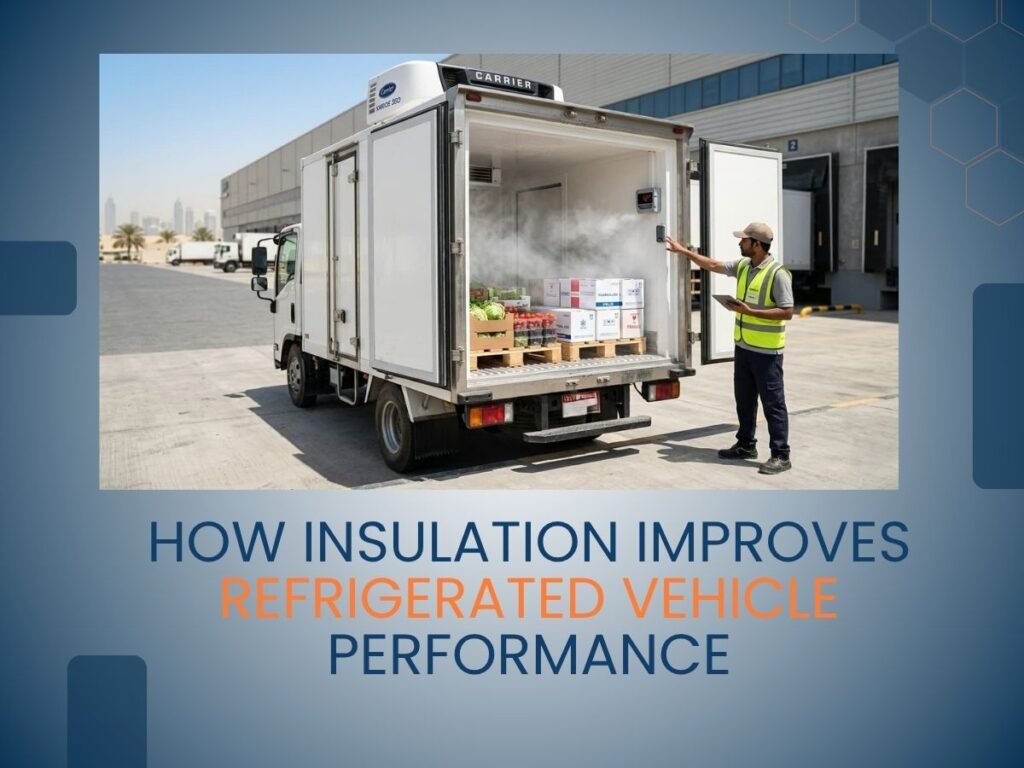
Every degree matters in cold chain logistics. Whether you operate a chiller van delivering fresh produce across the UAE or manage a fleet of refrigerated containers moving pharmaceutical products between emirates, your vehicle’s insulation is the single most critical factor in whether cargo arrives intact.
Insulation is not simply foam or fibreglass packed into walls. It is a precision-engineered system that determines how long your refrigeration unit runs, how much fuel your vehicle consumes, and whether your cargo meets the strict temperature standards required by food safety and pharmaceutical regulations.In this guide, we break down exactly how insulation improves refrigerated vehicle performance, what to look for when specifying or upgrading your cold chain vehicles, and why the right insulation choice can significantly reduce your operating costs.
What Is Thermal Insulation in a Refrigerated Vehicle?
Thermal insulation in a refrigerated vehicle refers to the materials and construction methods used in the cargo body to resist heat transfer between the outside environment and the temperature-controlled interior. The goal is simple: keep cold air in and warm air out, for as long as possible and with as little energy as possible.
In a climate like the UAE, where ambient temperatures regularly exceed 45°C, this is a demanding challenge. A poorly insulated cargo body forces the refrigeration unit to work harder, consuming more fuel and wearing out faster. A well-insulated body maintains set temperatures with minimal compressor cycling, preserving both cargo and equipment.
Common insulation materials used in refrigerated cargo bodies include the following options, each suited to different performance requirements and budgets:
- Polyurethane (PU) foam – the industry standard for high-density, low-thermal-conductivity panels, ideal for UAE’s extreme heat
- Expanded polystyrene (EPS) – a cost-effective option well suited for lighter-duty, short-haul chiller applications
- Vacuum insulation panels (VIPs) – an advanced option offering superior thermal performance in thinner walls, useful where cargo space is limited
- Fibreglass reinforced panels (FRP) – widely used for interior and exterior wall facings, offering excellent durability and resistance to impact
How Insulation Directly Improves Cold Chain Vehicle Efficiency
The relationship between insulation quality and refrigerated vehicle performance is direct and measurable. Better insulation reduces the thermal load on the refrigeration system, which in turn lowers fuel consumption, reduces maintenance costs, and extends equipment life. Here is how each benefit plays out in practice.
1. Reduced Refrigeration Unit Workload
When a cargo body is well insulated, heat infiltration from outside is minimised. The refrigeration unit does not need to run continuously to compensate for heat gain. This directly translates into lower operating costs and longer equipment life.
Key benefits of reduced refrigeration workload include:
- 20–40% reduction in refrigeration unit run time when upgrading from standard to high-performance PU panels
- Fewer compressor cycles, significantly extending the service life of the refrigeration unit
- Lower engine load on diesel vehicles, improving overall fuel economy across the fleet
- Reduced risk of refrigeration unit failure during peak summer months in the UAE
2. Faster Pre-Cool and Temperature Recovery Times
A well-insulated delivery box or cargo body reaches the required set temperature faster during pre-cooling before loading. When vehicle doors are opened during deliveries and warm air rushes in, superior insulation ensures the interior returns to the target temperature more quickly.
This speed of temperature recovery is particularly important because:
- Pharmaceutical cargo must remain within tight temperature bands – typically +2°C to +8°C – throughout the entire supply chain
- Even brief temperature excursions can render a pharmaceutical or food shipment non-compliant under UAE and international regulations
- Faster recovery reduces the cumulative thermal exposure of temperature-sensitive cargo across multi-drop delivery routes
- Drivers spend less time waiting for the cargo area to return to temperature, improving route efficiency
3. Lower Fuel Costs and Reduced Carbon Footprint
In a diesel-powered refrigerated vehicle, the refrigeration unit draws power from the engine. When insulation is poor, the unit runs longer and draws more power, increasing fuel consumption across the entire fleet. For logistics operators managing hundreds of chiller vans and refrigerated containers, this inefficiency represents a significant annual cost.
The fuel savings from investing in quality insulation are tangible and ongoing:
- Reduced refrigeration unit runtime directly lowers fuel burn per kilometre
- For large fleets, even a 10% improvement in thermal efficiency translates to substantial annual savings
- Lower emissions support sustainability reporting requirements increasingly demanded by large food retail and pharmaceutical clients
- Energy savings compound over the vehicle’s operating life, making insulation quality a key factor in total cost of ownership calculations
Key Insulation Specifications to Look for in a Refrigerated Cargo Body
Not all refrigerated cargo bodies are equal. When specifying vehicles for your cold chain operation, understanding these insulation-related factors will determine real-world performance and long-term operating costs.
Panel Thickness and Thermal Resistance (R-Value / K-Value)
The K-value (thermal conductivity) of the insulation material and the panel thickness together determine the overall thermal resistance of the cargo body. Lower K-values mean better insulating performance per millimetre of panel thickness.
For UAE operations, here are the key specifications to target:
- High-density PU foam: K-value of 0.022–0.025 W/m·K for best performance in extreme heat
- Chiller applications (+2°C to +8°C): minimum 60–75mm panel thickness recommended
- Deep-freeze applications (-18°C to -25°C): 100mm or greater panel thickness required
- Overnight parking in exposed yards requires thicker panels to maintain temperature without continuous refrigeration
Panel Bond Integrity and Seal Quality
Even the best insulation material will fail if the panels are poorly bonded or the seals around doors, floor penetrations, and refrigeration unit apertures are inadequate. Thermal bridging at these junctions can account for a disproportionate share of total heat gain.
When evaluating cargo body construction quality, look for the following:
- Full-injection polyurethane foam construction, where foam is injected as a liquid and expands to fill all cavities without gaps
- Continuous perimeter seals around all panel junctions, eliminating cold bridges
- Stainless steel or aluminium extrusion corner profiles rather than plastic, which degrade in UAE heat
- Certified K-value testing results from the manufacturer, not just marketing claims
Door Seals and Gasket Systems
Doors are the weakest thermal point in any refrigerated vehicle. They experience the most frequent thermal cycling and physical wear. High-quality magnetic door gaskets with compression seals maintain an airtight closure even as the vehicle body flexes during transit.
A door seal maintenance checklist should include the following inspection points:
- Check gasket compression – a sheet of paper held in the closed door should not slide out freely
- Inspect for cracks, tears, or hardening of the rubber, which are common in UAE’s UV-intensive environment
- Verify door hinge alignment – misaligned doors cause uneven gasket compression and localised heat ingress
- Replace gaskets at the first sign of deterioration rather than waiting for a compliance failure
Insulation Across Different Refrigerated Vehicle Types
Insulation requirements vary significantly depending on the vehicle type, cargo, and operating profile. Here is how thermal performance considerations differ across the most common cold chain vehicle formats used in the UAE.
- Chiller Vans: Used for fresh produce, dairy, and short-haul food delivery at +2°C to +8°C. Frequent door openings during urban deliveries mean insulation must recover temperature quickly. Lightweight, high-performance PU panels offer the best balance of thermal efficiency and payload capacity.
- Refrigerated Containers: Larger refrigerated containers used for inter-emirate transport or on-site cold storage face sustained heat exposure. High panel thickness and superior foam density are essential to maintaining consistent temperatures across long periods, particularly when the refrigeration unit is on standby.
- Insulated Mobile Workshops: Used in field service operations across energy, construction, and utilities sectors, insulated mobile workshops require insulation that regulates interior temperatures for both equipment protection and worker comfort. In UAE summer conditions, this is a critical health and safety consideration.
- Motorcycle Food Delivery Boxes: Compact insulated delivery boxes fitted to motorcycles for last-mile food delivery have no active refrigeration. Insulation alone determines how long cargo stays within safe temperature limits. High-density foam with minimal thermal bridging and tight-fitting lids are essential for UAE ambient conditions.
Insulation Maintenance: Protecting Long-Term Performance
Even the highest-quality insulation degrades over time without proper maintenance. Understanding the most common causes of performance deterioration allows fleet managers to implement preventive measures before problems result in cargo loss or compliance failures.
Common causes of insulation performance deterioration in refrigerated vehicles include:
- Water ingress through damaged panels or faulty seals, which dramatically increases thermal conductivity and reduces insulating effectiveness
- Physical impact damage to cargo body panels during loading, unloading, or minor vehicle collisions
- Deterioration of door gaskets from UV exposure, chemical cleaning agents, or normal daily wear
- Inadequate floor drainage allowing moisture to accumulate beneath the cargo area floor
- Unsecured refrigeration unit mounting points creating gaps in the rear wall insulation
A proactive maintenance programme should include the following scheduled activities:
- Full cargo body thermal inspection every 6–12 months by a qualified refrigeration technician
- Door gasket and hinge inspection at every vehicle service interval
- Internal and external panel inspection after any vehicle incident, however minor
- Annual refrigeration unit performance check including capacity testing against the original specification
Partnering with a specialist refrigeration maintenance provider in the UAE ensures issues are identified and resolved before they cause cargo loss or compliance failures. Reactive maintenance always costs more than prevention.
Frequently Asked Questions About Refrigerated Vehicle Insulation
Q1. How long does insulation last in a refrigerated vehicle?
A: Quality PU insulation lasts 10–15 years with regular maintenance, inspections, and prompt repair of door seals.
Q2 What is the best insulation for a refrigerated van in the UAE’s hot climate?
A: High-density injected polyurethane foam panels, 75–100mm thick, provide the best thermal resistance for UAE conditions.
Q3. Can better insulation allow me to use a smaller refrigeration unit?
A: Yes. Superior insulation reduces thermal load, enabling a smaller, lighter, more fuel-efficient refrigeration unit to be specified.
Ready to Improve Your Refrigerated Vehicle Performance?
VD Technical (VD Refrigeration) has been designing, manufacturing, and maintaining advanced refrigeration and transport solutions for the UAE market for over two decades. From custom chiller vans and insulated cargo bodies to full cold room installations and refrigerated containers, our team delivers durable, energy-efficient systems tailored for food, pharmaceutical, and logistics operators across the Emirates.
If you are looking to upgrade your fleet’s insulation performance, specify a new chiller van or delivery box, or establish a professional maintenance programme for your existing refrigerated vehicles, our specialists are ready to help.