
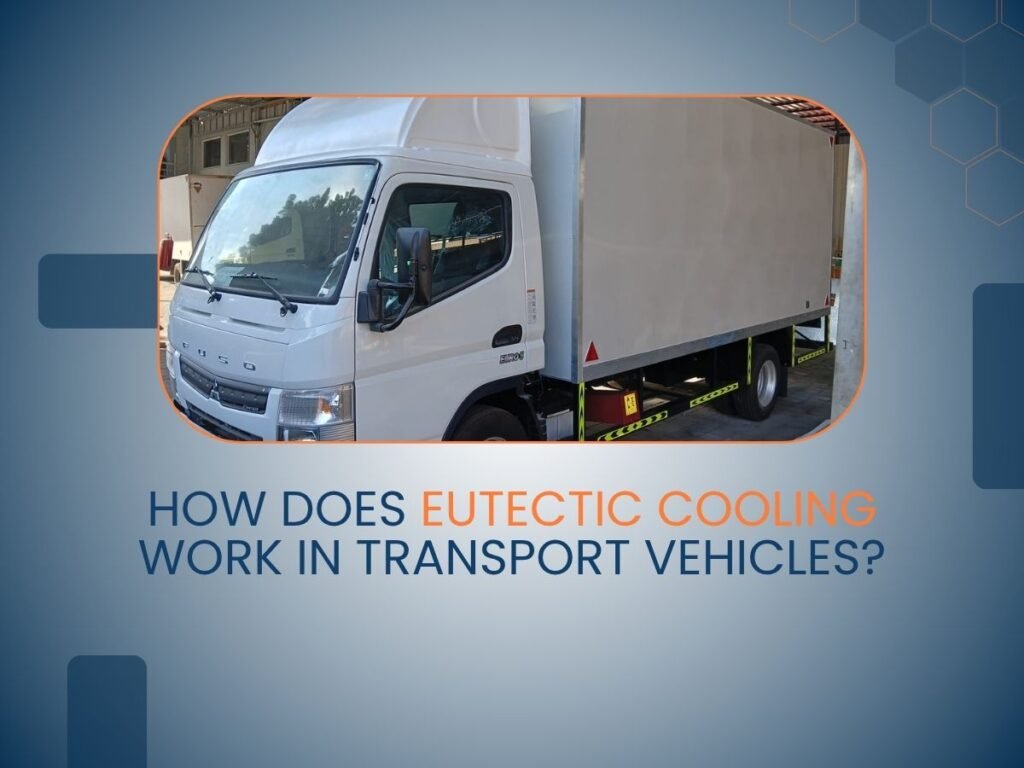
If you have seen a delivery van operating without a running refrigeration unit – or a vehicle that maintains cold temperatures even after the engine is switched off – there is a good chance eutectic cooling technology is at work.
Eutectic refrigeration systems represent one of the most innovative and energy-efficient approaches to temperature-controlled transport available today. They are increasingly used across food distribution, pharmaceutical logistics, and cold chain transport in Dubai and the wider UAE.
This guide explains what eutectic cooling is, how it works, when it is the right choice, and why manufacturers like VD Technical (VD Refrigeration) are at the forefront of eutectic system fabrication in the region.
What Is Eutectic Cooling?
The word “eutectic” comes from the Greek word for “easily melted.” In refrigeration science, a eutectic substance is a mixture of materials that has a specific, fixed melting and freezing point – typically below 0°C – where it can absorb or release large amounts of thermal energy (heat) without changing temperature.
In practical terms, a eutectic solution is pre-frozen to a set temperature during off-route hours (usually overnight when the vehicle is parked at the depot). The frozen eutectic solution is contained in specially built eutectic plates – sealed metal panels filled with the eutectic fluid.
During delivery rounds, these plates slowly absorb heat from the cargo area as the eutectic solution melts. This keeps the cargo space cold without requiring the vehicle engine or an external power source to run a mechanical compressor.
How Eutectic Plates Work Step by Step
Step 1 – Freezing (Charging Phase) The vehicle is connected to a mains electricity supply at the depot, typically overnight. A refrigeration unit powered by mains electricity cools the eutectic plates until the solution inside reaches its target freeze point. This is called “charging” the plates.
Depending on the system design, the eutectic solution can be formulated to freeze at temperatures ranging from -5°C (suitable for chiller applications) to -32°C or lower (suitable for deep freeze transport).
Step 2 – Delivery (Discharge Phase) When the vehicle departs, the eutectic plates begin absorbing heat from the cargo space. Because the plates contain a large mass of frozen eutectic solution, they have significant heat absorption capacity – maintaining the cargo temperature for many hours without any mechanical refrigeration running.
The duration of cooling depends on the volume of eutectic solution, the quality of vehicle insulation, the frequency of door openings, and the ambient temperature.
Step 3 – Re-Charging When the vehicle returns to the depot at the end of its delivery round, the eutectic plates are recharged overnight, ready for the next day’s operation.
Types of Eutectic Refrigeration Systems
Eutectic Plates The core component of any eutectic system. Plates are mounted inside the cargo body – typically on the ceiling, walls, or in purpose-built frames – and act as the cooling medium. VD Technical manufactures custom eutectic plates in Dubai in stainless steel and food-grade materials, in a wide range of sizes and temperature specifications.
Eutectic Refrigeration Units (Combination Systems) Some operations combine eutectic plates with a small mechanical refrigeration unit. The eutectic plates handle the bulk of the cooling load during delivery rounds, while the mechanical unit recharges the plates in transit (using engine power) for longer routes. This is particularly useful for operators covering long distances who cannot recharge at a depot midday.
Eutectic Truck Bodies Complete insulated vehicle bodies fitted with integrated eutectic plate systems. VD Technical manufactures custom eutectic truck bodies in Dubai, including dual-temperature eutectic trucks capable of maintaining both chiller and freezer zones simultaneously.
Eutectic Boxes and Ice Boxes For smaller-scale cold chain operations – including food delivery and pharmaceutical distribution – eutectic boxes are compact insulated containers fitted with eutectic plates. These are portable, require no power source during use, and are ideal for last-mile delivery applications.
Why Eutectic Cooling Is Ideal for UAE Operations
The UAE’s climate and urban delivery environment make eutectic systems particularly well-suited to the region.
No Engine Running Required
Conventional mechanical refrigeration units require the vehicle engine (or a separate diesel engine) to be running to power the compressor. In stop-start urban delivery routes, this means the engine runs constantly – increasing fuel consumption, emissions, and engine wear.
Eutectic systems eliminate this requirement entirely during delivery rounds. The plates maintain temperature without any power source. This is a significant fuel and cost saving for operators making multiple daily stops in Dubai traffic.
Silent Operation
Mechanical refrigeration units are noisy. Eutectic systems operate in complete silence during delivery – which is increasingly valued in residential delivery zones, hospital environments, and noise-sensitive areas.
Reduced Maintenance
Mechanical compressors have many moving parts that wear over time and require regular servicing. Eutectic plates have no moving parts. Once fabricated and installed correctly, they require minimal ongoing maintenance – typically limited to checking seals and connections.
Consistent Temperature Maintenance
Because eutectic plates absorb heat at a constant rate as they melt, temperature fluctuations in the cargo area are minimal. This is in contrast to on/off cycling mechanical systems that can allow temperatures to drift before the thermostat triggers another cooling cycle.
Compatibility with Renewable Energy
Eutectic systems can be charged using renewable energy at the depot – including solar power, which is increasingly viable in the UAE. This supports operators pursuing sustainability targets and reducing their carbon footprint.
Applications of Eutectic Cooling in the UAE
Food Distribution Fresh produce, dairy, meat, and beverage distributors operating urban delivery routes in Dubai and the UAE are well-suited to eutectic systems. The ability to make many stops without engine idling directly reduces delivery costs.
- Ice Cream and Frozen Foods: Eutectic freezer systems capable of maintaining -18°C to -25°C are widely used by ice cream distributors. VD Technical manufactures eutectic freezer systems for trucks in Dubai, including ultra-low temperature models for specialist frozen food distribution.
- Pharmaceutical Cold Chain The consistent, stable temperature profile of eutectic cooling makes it suitable for pharmaceutical distribution, particularly where temperature excursions must be minimised and documentation of temperature maintenance is required.
- Catering and Event Services Caterers delivering pre-prepared food to events and venues benefit from eutectic boxes and chiller bodies that maintain temperature without noise or engine operation at the delivery destination.
- Food-Grade Eutectic Box Manufacturing: For businesses that need portable cold storage for deliveries, food-grade eutectic boxes – manufactured in hygienic, easy-clean materials – are an effective and low-maintenance solution.
Choosing the Right Eutectic System
When selecting a eutectic refrigeration system, key considerations include:
- Target temperature range: Different eutectic solutions freeze and maintain different temperatures. Be precise about your product requirements.
- Duration of daily delivery round: The plate volume must be sized to maintain temperature for the full delivery duration, including door openings.
- Vehicle insulation quality: Eutectic systems perform best in well-insulated bodies. Poor insulation increases the heat load on the plates and reduces operating duration.
- Depot charging infrastructure: You will need a suitable mains electricity supply at your depot to charge the plates overnight.
- Product mix: Dual-temperature eutectic truck bodies can maintain chiller and freezer zones simultaneously for operators carrying mixed loads.
VD Technical’s engineering team can advise on the correct eutectic plate specification, unit type, and insulated body design for your operation.
Frequently Asked Questions
Q1. How long do eutectic plates keep a vehicle cold?
A: Typically 6–12 hours for chillers; freezer applications last less depending on insulation and ambient temperature.
Q2. Is eutectic cooling more expensive than mechanical refrigeration?
A: Initial costs are similar, but eutectic systems offer much lower operating and maintenance expenses.
Q3. Can eutectic plates be retrofitted to existing refrigerated vehicles?
A: Yes, retrofit is possible if the vehicle has suitable insulation and adequate mounting space.
Discover the Benefits of Eutectic Refrigeration for Your Fleet
VD Technical is Dubai’s leading manufacturer of eutectic plates, eutectic refrigeration units, eutectic truck bodies, and eutectic boxes – with custom fabrication capability for chiller, freezer, and dual-temperature applications.
Their team can design and build a eutectic system matched precisely to your delivery operation, product requirements, and vehicle type.
Contact VD Technical today to explore how eutectic cooling can reduce your fuel costs, cut maintenance overheads, and improve temperature consistency across your cold chain fleet.